Archive | Project Pastry Queen RSS feed for this section

Apple Cinnamon Mini Loaves with Apple Brandy Glaze

14 May


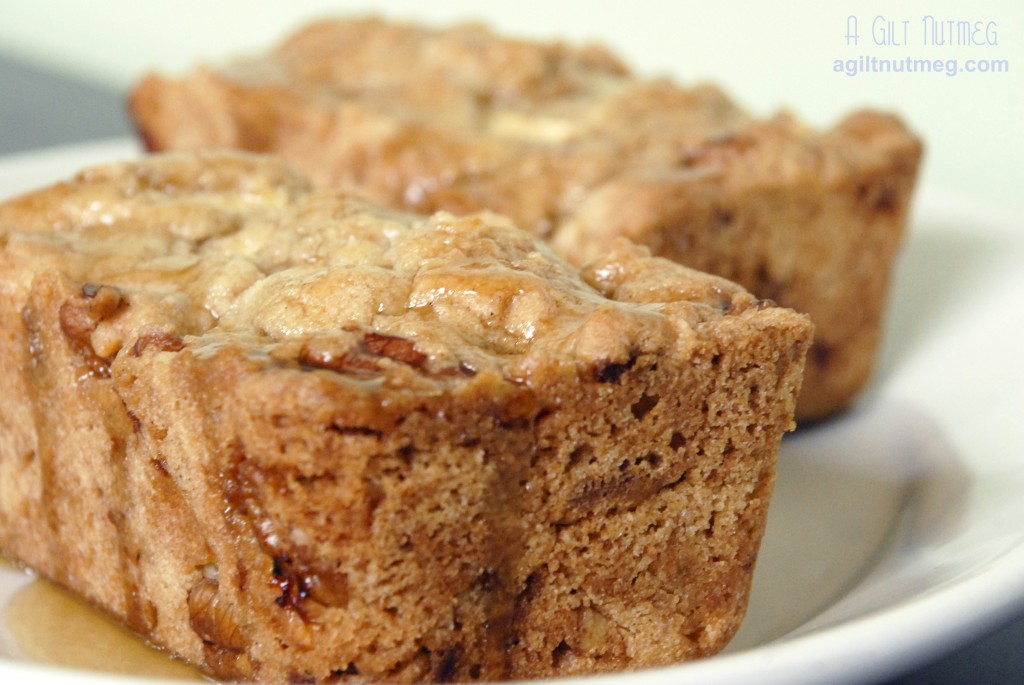
apple cinnamon loaves with apple brandy glaze

In trying to pick this week’s PPQ recipe, I chose these little cake loaves thinking they might be nice for Mother’s Day Brunches.  What I didn’t realize was that I might come across one of my new favorite recipes from The Pastry Queen.  These little loaves are super moist yet they have a great crunchy-chewy crust and the nutty spicy apple flavor is just phenomenal.  The cakes are not too sweet and perfect for any time of the day…which is bad news for me because it means I’ll be eating them morning, noon and night if I can.  You can bake it as one big cake instead, but mini loaf pans are super cheap at Sur la Table and I think they’re totally worth the few dollars investment (especially around the holidays).

I only made two changes to Rebecca’s original recipe: first, since I had limited time and only 2 loaf pans, I made a half recipe.  The Boyfriend loves spice more than anything so I dutifully used the original cinnamon and nutmeg measurements instead of halving them and they turned out so well that I will absolutely be doubling the amount when I make a full sized batch next time.  I almost worry about the lack of spicy flavor there could have been if I had followed the original recipe.  Second, I didn’t feel like hunting down a bottle of Calvados (an apple brandy), so instead of the 1 Tablespoon of Calvados, I subbed 1 Tablespoon of apple juice and 1 Tablespoon of normal brandy and just let it boil off a little longer.  I think the result was just as good as the original.

Really, I can’t say enough about how much I love this recipe.  It strikes exactly the right chord of sweetness, crunch, nuttiness, and soft moist cake texture.  Since we finished the two mini loaves I made today for Mother’s Day within minutes, I am absolutely coming home from the office tomorrow and using up the rest of my apples on another batch.

Be sure to check out the other Project Pastry Queen-ers versions here!

Mini Apple-Cinnamon Loaves with Apple-Brandy Glaze
Adapted from The Pastry Queen by Rebecca Rather
Makes 5 Mini Loaves

Loaves:

  • 1 1/4 cup vegetable oil
  • 2 cups sugar
  • 2 large eggs
  • 2 tsp vanilla
  • 3 cups flour
  • 1 tsp cinnamon
  • 1 tsp nutmeg
  • 1/2 tsp baking soda
  • 1 tsp salt
  • 3 large apples, peeled, cored and diced (I used Granny Smith apples)
  • 1 cup pecans

Glaze:

  • 1/4 cup unsalted butter
  • 1/3 cup packed light brown sugar
  • 1 Tbsp light corn syrup
  • 1 Tbsp apple juice
  • 1 Tbsp brandy
  1. Heat the oven to 350 degrees.  Grease 5 miniature loaf pans (sized approximately 6″ x 4″ x 2″) and set aside.
  2. In a large bowl, whisk together the oil, sugar, eggs and vanilla until thoroughly combined.
  3. In a separate bowl, mix together the flour, cinnamon, nutmeg, baking soda and salt.
  4. Add the flour mixture to the oil mixture until fully incorporated.
  5. Rebecca helpfully pointed out that the batter will be very stiff at this point, not very liquid, so it will be a little difficult to mix in the apples and pecans, but it works.  I didn’t want to use my stand mixer in case it broke up the apples into mush, so I pulled the bowl off the mixer and stirred the apples and pecans in by hand with a wooden spoon.  Mix in until they’re evenly distributed.
  6. Press the batter into the loaf pans so that the pans are about 3/4 full and smooth the tops out with the back of the spoon.
  7. Bake for 55-60 minutes; an inserted toothpick should come out clean and they should be a light golden brown on top.
  8. Cool in the pan for 10 minutes then take the loaves out of the pan and let them finish cooling on a wire rack.
  9. While the cakes are cooling, melt the butter in a small saucepan whisk in the brown sugar, corn syrup, apple juice and brandy.  Let it simmer for 5 minutes so it can thicken and then spoon a couple of spoonfuls of the glaze over each loaf.
  10. Let the cakes fully cool and the glaze dry for at least an hour before wrapping them–if they even last that long!  Enjoy!

Oatmeal Crisps

23 Apr


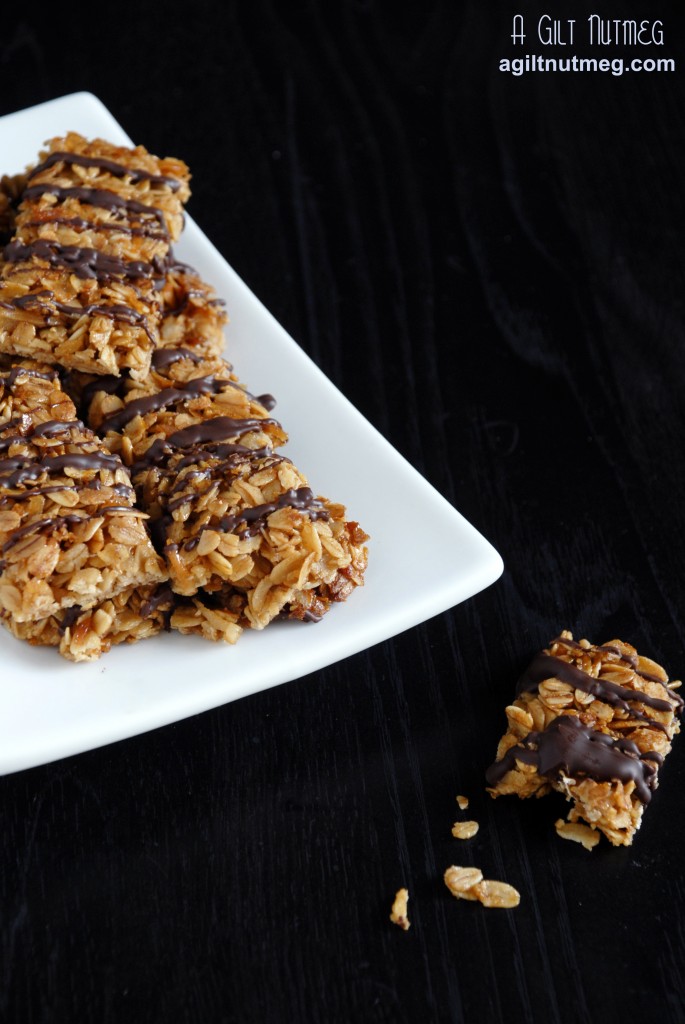
oatmeal crisps

Considering Oatmeal Raisin Cookies are one of my favorite cookies of all time, I had a suspicion that these crisps from The Pastry Queen might be particularly up my alley–and I was right!  These are deliciously oaty and brown sugary and (thanks to the incorrect assumption that I had corn syrup at home) full of honey flavor.  These remind me of my favorite crunchy granola bars and, truthfully, I don’t think these even need chocolate on top, which is why I just drizzled it on instead of making one thick layer of it–and when I make them again I won’t even add the chocolate.  I can’t wait to make another batch just to crumble over yogurt or ice cream!

Thanks to Missy for choosing this week’s recipe and check out the other PPQ members versions here!

Oatmeal Crisps
Yields one 9×13″ pan
Adapted from The Pastry Queen

  •  1/2 cup unsalted butter
  • 1/2 cup firmly packed dark brown sugar
  • 1 Tablespoon honey
  • 2 cups old-fashioned rolled oats
  • 1 teaspoon baking powder
  • 1/4 teaspoon salt
  • 1/3 cup sweetened shredded coconut
  • 1/2 cup bittersweet chocolate chips (optional)
  1. Heat the oven to 350 degrees and grease a 9×13″ glass baking dish.
  2. In a small saucepan, melt the butter and stir in the brown sugar and honey until the mixture is smooth, about 2 minutes and turn off the heat.
  3. With a wooden spoon in a large bowl, stir together the oats, baking powder, salt and coconut; stir in the butter mixture until the dry ingredients are fully coated in the liquid ingredients.
  4. Pour the mixture into the prepared dish and, with the back of the wooden spoon, pat the mixture into a flat, even layer in the dish.
  5. Bake for 20-25 minutes and take the dish out to cool on a wire rack for 20 minutes.  When you pull the dish out, the mixture will still be liquid, but it will harden and crisp as it cools.
  6. After cooling for 2o minutes, line a cutting board with wax paper or parchment paper.  Lay the cutting board over the top of your glass dish (papered side facing the cooled oatmeal mixture), then flip the pan over so that the oatmeal mixture lays flat on the papered cutting board.  With a sharp knife or pizza cutter, gently cut the oatmeal slab into bars.  The bars will be fragile and will stretch a little bit; just push them back into shape with your fingers.  If you are planning on drizzling chocolate over the bars, leave them on the parchment paper while you melt the chocolate.
  7. If you choose to drizzle chocolate over the bars, set a large pot of water simmering and in a metal bowl placed over the pot of simmering water, melt the chocolate chips.  Once the chocolate is melted, drizzle it in a thin stream back and forth over the bars.  Let the chocolate cool and harden completely.
  8. My only warning is that humidity will turn these bars soft, but they will still be delicious.  Store them in an air-tight container until you’re ready to eat.  Enjoy!


Peanut Buttercups with Peanut-Penuche Icing

16 Apr


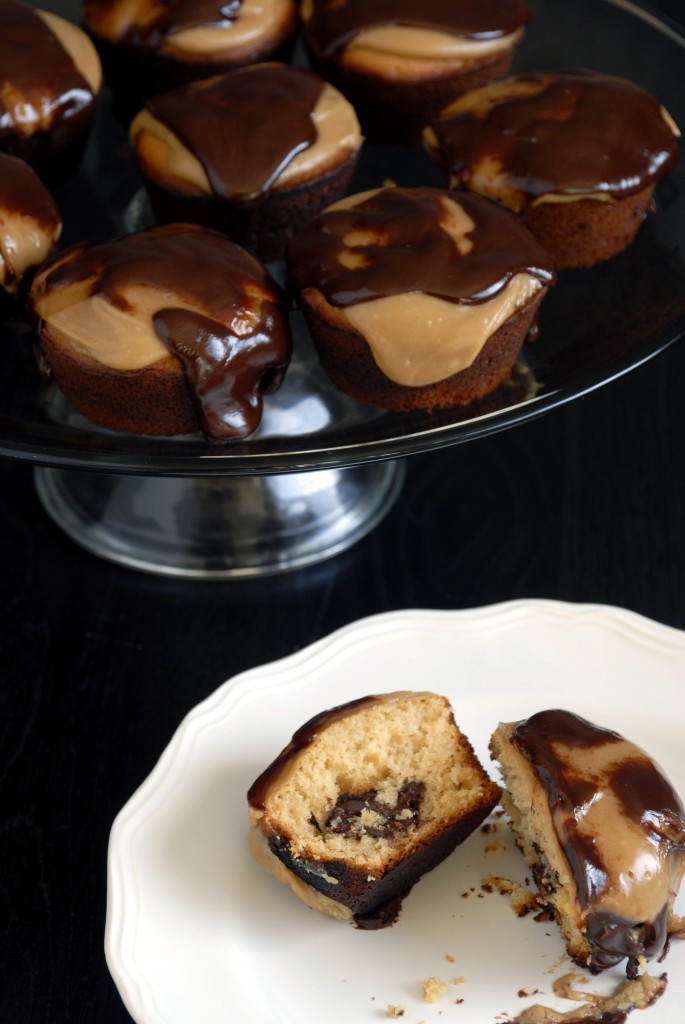
peanut butter chocolate cupcakes

While peanut butter cupcakes aren’t my favorite, I knew these would be a hit for our April birthdays celebration, so I made Jen‘s PPQ choice as well as next week’s PPQ Oatmeal Crisps to bring into the office.  Good for any sort of celebration, these cupcakes are sort of like an inside-out Reese’s Peanut Butter Cup with the peanut butter on the outside and a pocket of chocolate on the inside.  They’re topped with a peanut butter penuche icing–a term I had not known before Pastry Queen and, subsequently, Wikipedia, which says it is a “fudge-like candy made from butter, brown sugar and milk”.  Rebecca added peanut butter for flavor and I thought the rich, gooey topping was a nice change from the normal whipped buttercream frosting.  To balance out the peanut-butter-on-top-of-peanut-butter overdose, I added some bittersweet chocolate ganache on top.  You can see that the chocolate sort of separated as it ran down the sides of the cupcakes, but it still adds that little break from the peanut butter I think is necessary.  Be sure to check out Project Pastry Queen for the other members’ takes on the recipes.

Aside from adding the ganache on top, I also made these in normal cupcake tins as opposed to the “Texas-sized muffin tins” Rebecca suggests.  Other PPQ members warned against over filling the muffin tins and I concur with this advice–I filled the cups just halfway, inserted the chocolate pieces, then dabbed just enough batter over the chocolate to cover it.  The cupcakes baked up beautifully.  In addition, the batter made enough for 20 normal-sized cupcakes, not the suggested 12.

Peanut Buttercups with Peanut-Penuche Icing
Adapted from The Pastry Queen
Yields about 20 standard size cupcakes

Cupcakes

  • 1 3/4 cups flour
  • 1 Tablespoon baking powder
  • 1/4 teaspoon salt
  • 1 1/4 cups firmly packed dark brown sugar
  • 6 tablespoons unsalted butter at room temperature
  • 1/3 cup peanut butter (smooth or chunky will do)
  • 1 cup milk
  • 1 teaspoon vanilla extract
  • 2 eggs
  • 1 bar bittersweet chocolate (4 oz), broken into 20 equal-ish pieces

Penuche Icing

  • 1/4 cup unsalted butter
  • 1/4 cup smooth peanut butter
  • 1/4 cup milk
  • 1 cup firmly packed dark brown sugar
  • 1/8 teaspoon salt
  • 1 teaspoon vanilla extract
  • 1/2 cup powdered sugar

Chocolate Ganache

  • 1 bar bittersweet chocolate (4 oz), chopped
  • 1/2 cup heavy cream
  • 2 tablespoons corn syrup
  1. Heat the oven to 350 degrees and lightly coat two cupcake tins with non-stick baking spray or cupcake paper cups.
  2. In a large bowl, mix the flour, baking powder, salt and sugar until well combined.
  3. Add the butter, peanut butter, milk and vanilla, beating until thoroughly combined, about 1 minute.
  4. Add the eggs and beat for another few minutes on medium speed until the eggs are fully incorporated.
  5. Fill 20 of the cupcake cups halfway to the top and insert a piece of chocolate into each cup.  Dab a spoonful of batter on top of each chocolate piece to cover it–you should have just barely enough batter to complete this.
  6. Bake for 30-35 minutes until the tops are light brown and an inserted toothpick comes out clean, except for melted chocolate from the center.  While the cupcakes are baking, start making the frosting, since you’ll need to let it rest for a while.
  7. In a medium saucepan, melt together the butter, milk, brown sugar and salt.  Bring the mixture to a low boil and, without stirring once, let it boil slowly for 1 1/2 minutes.  Turn the heat off and let the mixture cool for 30 minutes at the most.
  8. Cool the muffins for 10 minutes before taking them out of the pan, then let them cool on a wire rack before frosting.
  9. Add the vanilla and powdered sugar to the cooled frosting and beat it for about 1 minute on medium speed until the icing is creamy.
  10. Frost the cupcakes right away or else the peanut butter icing gets clumpy.
  11. Once you’ve got those iced and the icing is setting, heat the heavy cream until almost boiling, then pour it over the chopped chocolate, whisking until you’ve got a smooth ganache.  Pour a spoonful of ganache over each cupcake and enjoy!

Tropical Carrot Cake with Coconut Cream Cheese Frosting

19 Mar


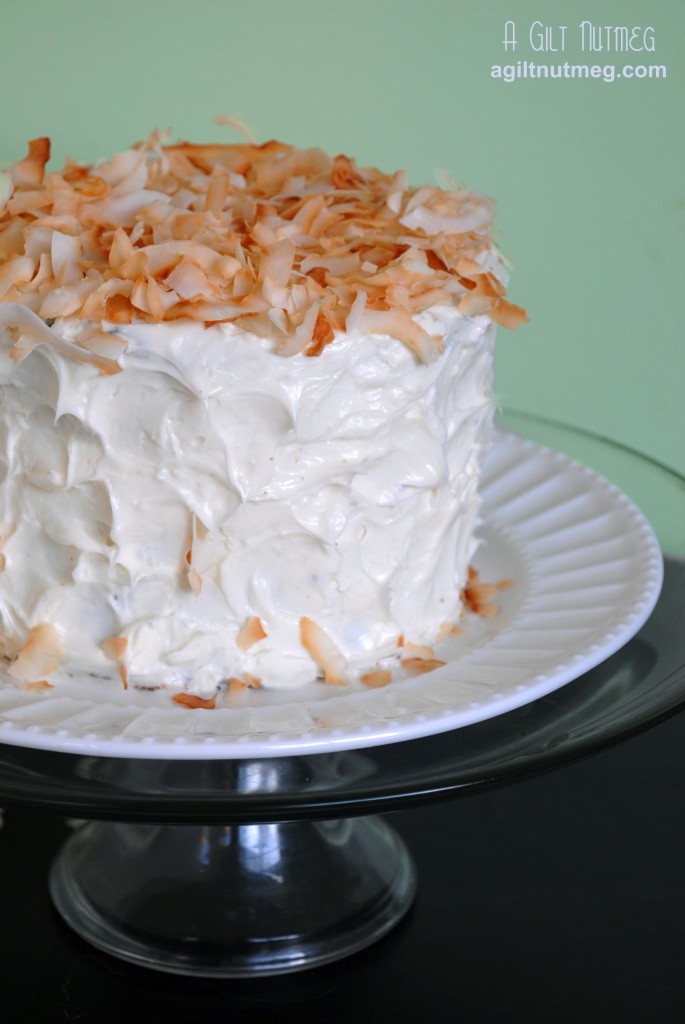
tropical carrot cake

In my house, carrot cake and I have a very notorious love/hate relationship and it’s exactly this love/hate relationship that made me choose this recipe for Project Pastry Queen this week.  Love because while I certainly enjoy carrot cake’s spicy, moistness, The Boyfriend LOVES carrot cake and things are always more fun to make when you know the person receiving it is going to love it.  Hate because I have never found a carrot cake that works out according to the recipe.  Long story short: no matter what carrot cake recipe I try (even Cooks Illustrated’s recipe!), the bake time for me is always almost double what the instructions call for.  Pastry Queen’s recipe is no different.  (I might add that this phenomenon only happens to me with carrot cake–my oven bakes everything else exactly according to the instructions!)  I let the carrot cake bake longer than the suggested time, took it out to cool when I thought it was done and cut into it, found it was still cake batter in the middle, and had to put it back in the oven.  I thought I had ruined the cake and went to bed very angry that night, but woke up the next morning, tasted the cake, and to my delight (maybe just relief) realized that it turned out just fine.

That all said, this is one outstanding cake.  Truly it is!  Instead of just a spice cake with flecks of orange in it, this is a cake packed with ingredients–pineapple, coconut flakes and macadamia nuts make this one incredible cake with a very tropical flair.  There’s even cream of coconut in the frosting.  Despite baking for so long, the cake didn’t dry out at all.  And to amp it up just a little more, I added some toasted shaved coconut to the top of the cake as well.  I think that, now that I’ve figured out to just leave the cake in the oven for as long as humanely possible, I’ve finally found a carrot cake recipe that I can stand behind!  Check out the other PPQer’s takes on the recipe here.

Notes: The cake above is a half recipe, baked in two 6″ cake pans, but was frosted with a full recipe of frosting.  If you make a full recipe of cake (which, in true Pastry Queen style, makes a BIG cake), I suggest doubling your frosting recipe.  I found the shaved coconut at my local co-op: they were selling a small package of it on the shelf next to the other coconut products for $3.95, but I found shaved coconut in their bulk aisle and filled a giant bag, twice as much as I needed, for 60 cents.  I’ve learned my lesson in creative shopping and deal hunting!

Tropical Carrot Cake with Coconut Cream Cheese Frosting
Adapted from The Pastry Queen by Rebecca Rather

Carrot Cake

  • 1 cup macadamia nuts
  • 3 cups flour
  • 3 cups sugar
  • 1 tablespoon baking soda
  • 1 teaspoon salt
  • 1 tablespoon cinnamon (I doubled this in my recipe)
  • 1/2 teaspoon nutmeg (I doubled this in my recipe)
  • 1 1/2 cups sweetened shredded coconut
  • 4 large eggs
  • 2 tablespoons vanilla
  • 1 1/2 cups canola oil
  • 1 1/2 cups shredded carrots (Pre-shredded carrots from Trader Joes are a time saver!)
  • 1 1/2 cups canned pineapple pieces (I roughly chopped them into smaller bits)
  • 1/2 cup sweetened cream of coconut, such as Coco Lopez (found in the alcohol section as a drink mix-in at my grocery store)

Coconut-Cream Cheese Frosting

  • 3 packages (8 oz) cream cheese, room temperature
  • 1 1/2 cups powdered sugar
  • 1/4 cup heavy whipping cream
  • 1/4 cup sweetened cream of coconut, such as Coco Lopez
  • 1/2 teaspoon of salt


  1. Heat the oven to 350 degrees.  Spread the macadamia nuts in a single layer on a baking sheet and toast them in the oven for 7 to 9 minutes.  Leave the oven on.
  2. Evenly space your oven racks so that one is 1/3 from the bottom of the oven and the other is 1/3 up from that.
  3. Line three 9″ cake pans with circles of parchment paper  and spray with non-stick baking spray.
  4. In a large bowl, whisk together the flour, sugar, baking soda, salt, cinnamon, nutmeg, coconut and macadamia nuts.
  5. In another large bowl, whisk together the eggs, vanilla, oil, carrots, pineapple and cream of coconut.
  6. Add the wet ingredients to the dry and mix until thoroughly combined.
  7. Evenly divide the batter amongst the three cake prepared cake pans and arrange the pans in the oven so that two pans are on one rack, the third is on the other rack, and that none of the pans are directly above or below the others.
  8. Bake for 30-35 minutes (or, in my case, closer to an hour–put some tin foil over the top if it starts to darken too much, but before taking it out, make sure that the center is fully set and that a cake tester comes out clean and not sticky whatsoever.)
  9. Cool the cakes on a wire rack for 5 minutes still in their pans, then invert them and cool completely before frosting them.
  10. Beat the cream cheese and powdered sugar together in a large bowl until combined and creamy.  Add the whipping cream, cream of coconut, and salt and beat until combined and smooth.
  11. Frost the cakes according to your desire– the cake layers did sink just a little bit so I added a bit of extra frosting to make them sit evenly on each other.
  12. To make the toasted shaved coconut, set your oven on broil, spread 1-2 cups of the coconut in a single layer on a baking sheet and toast for 2 minutes, stir the coconut so that it is redistributed for even browning, and toast for another 2 minutes until golden brown.  Let cool before sprinkling it over the top of the cake.  Enjoy!

Rebecca notes: “The cake can be covered with plastic wrap and refrigerated up to 4 days.  Let it cool in the refrigerator about 1 hour before covering to ensure the frosting has hardened and will not stick to the plastic wrap”.  I can add that I hate hate hate cake in the fridge because it dries out and doesn’t taste as good, but this cake is so moist and flavorful that it was great straight from the fridge even.  If serving a whole cake to friends, though, I’d let it warm up 30 minutes or so before serving.

Rather Rich Corn Muffins

12 Mar


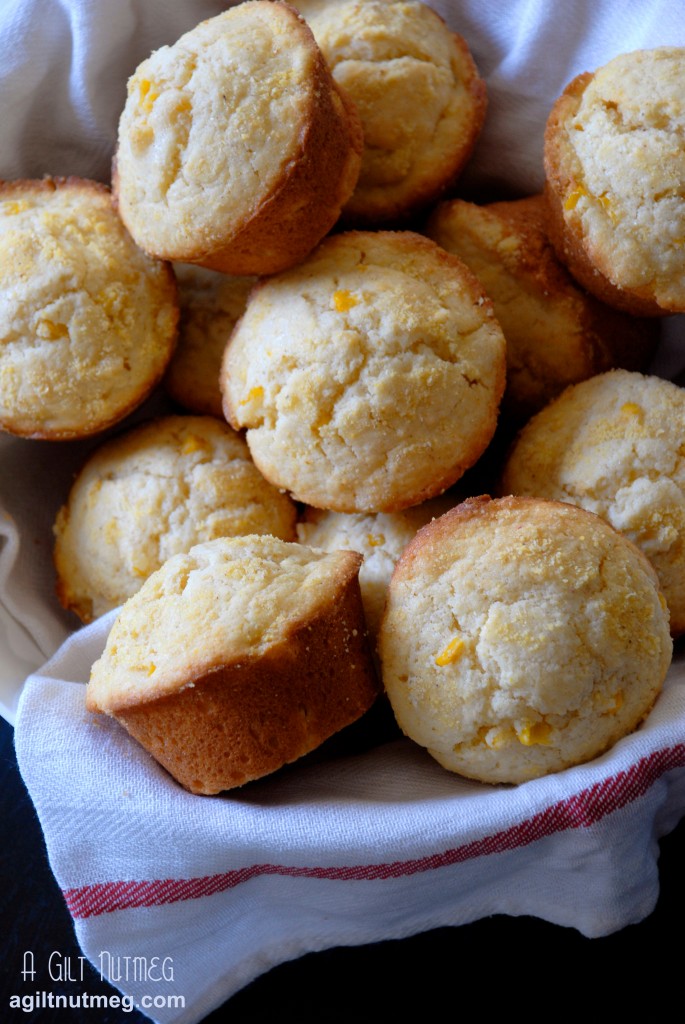
I don’t know if words can even begin to describe these corn muffins.  I mentioned in a previous post that a friend had a rating system for tiramisu all over the city of LA.  Well, The Boyfriend has a similar system in place for corn muffins and cornbread.  Currently, his favorite is at a restaurant called Bandera, and while I know that Bandera’s cornbread still has a stronghold on his heart, I think he was pretty impressed with these corn muffins.  I know I was at least:

This recipe makes some of the most delicious, tender, delicate corn muffins I have ever had the pleasure of eating!  I almost can’t believe that they came out of my kitchen.  The only change I made to the recipe was to use fine ground corn meal instead of coarse ground, mostly just because that was all I had on hand.  That said, I think the texture of the fine ground corn meal was what contributed to such a tender muffin while still giving it the occasional chewy grains that I love so much in corn muffins.  The recipe below is for a half batch–it makes about 12 muffins.

Pay no attention to the name, “Rather Rich”…just ignore it and savor them and forget about the health level of muffins made entirely with heavy cream.  Amanda, of Fake Ginger, hosted this recipe on Project Pastry Queen way back in February of 2010, but I sure am glad I came back to try them!  Many of the other members loaded the muffins up with cheese and jalapenos and such, so check out everyone’s versions here.

Rather Rich Corn Muffins
Adapted from The Pastry Queen
Makes 12 muffins

  • 6 tablespoons unsalted butter, melted and cool
  • 1 1/2 cups heavy cream
  • 2 eggs
  • 1 3/4 cups flour
  • 3/4 cup fine corn meal
  • 1/2 cup sugar
  • 1 tablespoon baking powder
  • 1/4 teaspoon salt
  • 1/2 cup canned corn kernels
  1. Heat the oven to 350 degrees and thoroughly spray a muffin tin with nonstick baking spray.
  2. Mix the melted butter, cream and eggs in a large mixing bowl.
  3. Stir in the flour, cornmeal, sugar, baking powder and salt until ingredients are combined.
  4. Stir the corn into the batter, then evenly divide the batter among the 12 muffin cups.  Sprinkle some additional cornmeal over the top of the batter.
  5. Bake for approximately 15 minutes until the muffins are light brown around the edges and firm when you press them on top.
  6. Let them cool in the muffin tin for 5-10 minutes, because they’ll be fragile at first, but be sure to take them out of the pan and let them cool on a wire rack so they don’t get soggy.
  7. They’ll be best served warm; but it seems Rebecca too has discovered my favorite way to eat a corn muffin: cut in half, toasted, smeared with butter!

Rum Pecan Pound Cake

27 Feb


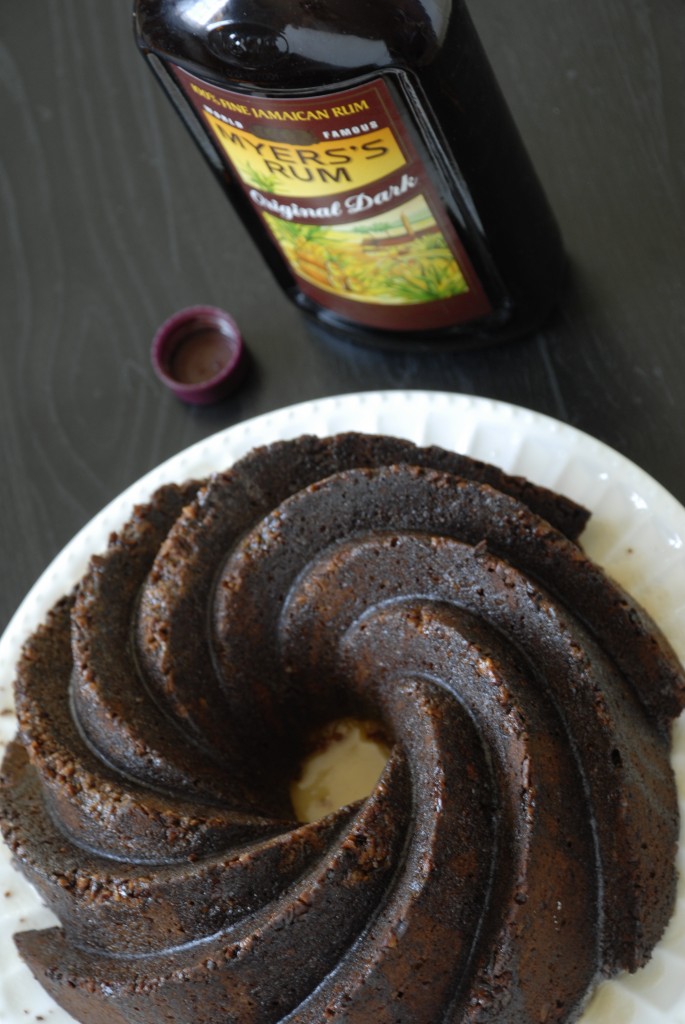
rum pecan pound cake

If you don’t like rum, then this is not the recipe for you: this is a VERY rummy pound cake.  I’m not sure why exactly my cake turned out so very dark–I baked it to the time Rebecca suggested and it didn’t seem overbaked on top, so I was quite surprised to see it pop out of the mold this color.  The cake sure tasted fine and was certainly the right buttery color on the inside, so I’m not too worried.

Overall, I’m not the biggest fan of rum, but if you want an adult cake for an adult gathering, this is certainly a recipe you should give a try.

Shawnda picked this recipe and you can see how the other PPQ’ers liked the recipe here.

Totally Rummy Pound Cake
from The Pastry Queen by Rebecca Rather

For the cake:

  • 1 1/2 cup pecans
  • 2 sticks unsalted butter, room temperature
  • 2 1/2 cups sugar
  • 5 large eggs
  • 3 cups flour
  • 1 teaspoon baking powder
  • 1/2 teaspoon salt
  • 2/3 cup sour cream
  • 1 tablespoon vanilla
  • 1/2 cup dark rum

For the glaze:

  • 1/4 cup unsalted butter
  • 1/4 cup water
  • 1/2 cup sugar
  • 1 tablespoon freshly squeezed lemon juice
  • 1/4 cup dark rum
  1. Heat the oven to 350 degrees and grease a 10-12 cup bundt pan.
  2. Spread the pecans out on a baking sheet and bake them for 5-7 minutes.
  3. Take 1/4 of the pecans and coarsely grind them in a food processor.  Keeping the rest of the pecans separate, roughly chop them and put them aside.  Use the 1/4 cup of coarsely ground pecans to dust the inside of the greased pan.  Shake the pan around so that it’s evenly coated in pecans.
  4. In a large mixing bowl, beat the butter for 1 minute.  Add the sugar and beat for 2 additional minutes, scraping the sides of the bowl down with a spatula.
  5. Add the eggs and beat for 2 minutes.  The batter should be light yellow and well incorporated at this point.
  6. In a separate medium bowl, combine the flour, salt and baking powder and mix together.
  7. Add approximately one third of the flour mixture to the butter-sugar mixture and beat on low until the flour is fully incorporated.  Add half the sour cream and mix.  Repeat with the next third of the flour, the rest of the sour cream, then the rest of the flour mixture.
  8. Finally, add the vanilla and rum, beating until thoroughly incorporated, then gently mix in the chopped pecans that were set aside.
  9. Pour the batter into the prepared pan and bake about 1 hour 20 minutes (although I wonder if that time is too much–keep checking yours and pull out as soon as the top seems done and slightly springs back when pressed).
  10. Let the cake cool 15 minutes then invert it onto a wire cooling rack and let it cool for an hour before serving.  In the meantime, make the glaze.
  11. In a small saucepan, melt the butter and add the water, sugar, lemon juice and rum.  Bring it to a boil for one minute before taking it off the heat.
  12. Poke the cake repeatedly all over with a toothpick or wooden skewer and then pour the glaze all over the cake.  The instructions say to pour all of the glaze over the cake, but there’s so much of it, that I poured only about 2/3 of it before I decided that it was just too much glaze.  You can use your best judgement over how much glaze you want to use.
  13. Rebecca suggests that the pound cake flavors will mellow overnight, so  try baking it a day or two before you plan to serve it.  Enjoy–but try not to get drunk off two slices!


Mexican Chocolate Cake

20 Feb


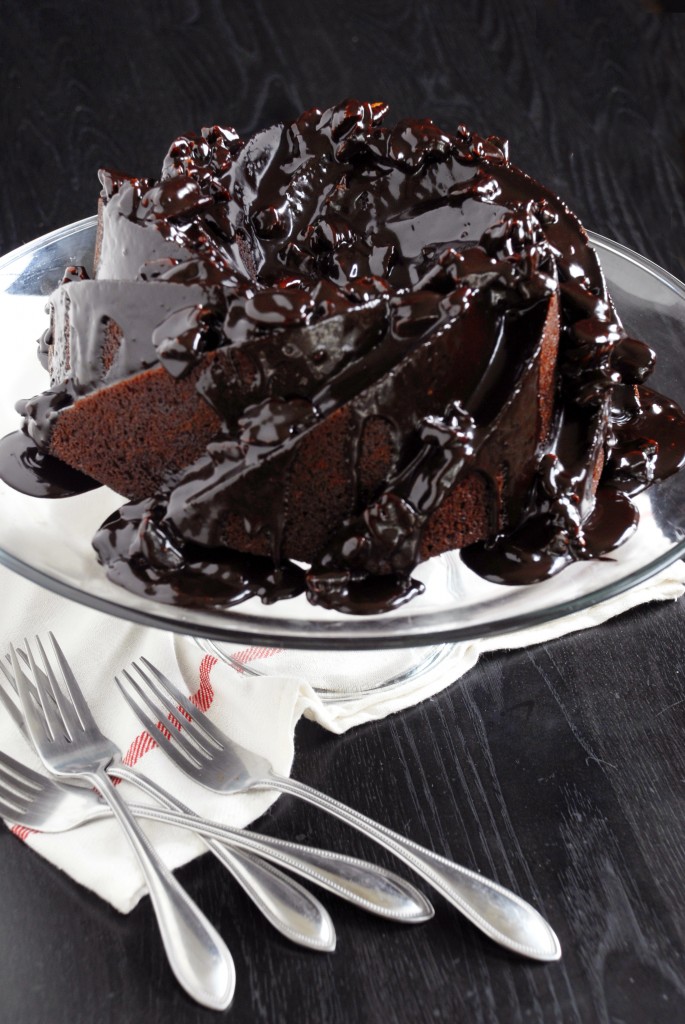
mexican chocolate cake

So every once in a special while my friend hosts Taco Night at a nearby bar.  They don’t normally allow outside food in, but Jake charms them and this Polish (yes, Polish) bar lets Jake bring in 100 tacos for his friends to feast on.  So in honor of Tacozawa night, I did this week’s Project Pastry Queen project a little early and was able to bring Mexican Chocolate Cake to go with the tacos.  In a testament to Rebecca’s recipe, the cake got more compliments than the tacos, which I’m pretty sure is a first!

The cake is light in texture but rich in flavor and the glaze is…well, it’s the icing on the cake.  Except for the little problem I had with the glaze seizing up on me (turning super gritty to the point of no return–it was my fault for having the heat on too high) and having to start over on it, this cake is super simple and took almost no work at all.  The cinnamon in the batter makes this a very fun and refreshing change from your normal chocolate cake and at Tacozawa I was even told from someone whose family is actually from Mexico that this cake tasted extremely authentic.  Bring it to your next gathering and it’ll be the talk of the party!

Note: I used E. Guittard Cocoa Rouge for the cocoa powder in this recipe and it was absolutely delicious.  I think it’s the reason my cake almost came out jet-black and so rich in chocolate flavor.  I highly recommend it!

Check out the other PPQers take on this recipe here and thanks, Jen, for a fantastic choice this week!

Mexican Chocolate Cake
From The Pastry Queen by Rebecca Rather

Cake

  • 1 cup unsalted butter
  • 1/2 cup unsweetened Dutch-process cocoa powder
  • 3/4 cup water
  • 2 cups sugar
  • 2 eggs
  • 1 cup buttermilk
  • 2 tablespoons vanilla extract
  • 2 cups all purpose flour
  • 1 tsp baking soda
  • 1 1/2 tsp ground cinnamon
  • 1/4 tsp salt

Glaze

  • 1 cup pecans
  • 1/2 cup unsalted butter
  • 1/4 cup milk
  • 1/2 cup high-quality cocoa powder
  • 2 cups sifted powdered sugar (sift first, then measure the 2 cups of sugar out)
  • 1 tablespoon vanilla extract
  • 1/4 tsp salt
  1. Heat the oven to 350 degrees and heavily grease a 9″ tube pan or a Bundt pan (this was my first foray into owning a Bundt pan and, as you can see, I went for the vintage shaped pan instead of the more traditional shape).  If you don’t have baking non-stick spray, use butter and then sprinkle the inside with flour, tapping the excess out of the pan.
  2. In a large saucepan, melt the butter over medium-low heat and whisk in the cocoa until smooth.  Add the water to the cocoa butter mixture and whisk until smooth, then turn the burner off.
  3. Add the sugar, eggs, buttermilk and vanilla to the cocoa mixture and whisk until ingredients are thoroughly incorporated.
  4. Add the flour, baking soda, cinnamon and salt all at once and whisk until everything is, again, fully incorporated (Rebecca warns it’s okay if there are some small lumps, but I didn’t encounter any).
  5. Pour the batter into the prepared pan and slide it in the oven to bake for 40-45 minutes, until firm yet springy to the touch and the edges start to pull slightly away from the pan.
  6. Take the pan out (leave the oven on) and let the cake cool for 20 minutes in the pan, then invert the cake on to a wire rack to finish cooling.
  7. Once you take the pan out of the oven, spread the pecans out on a baking sheet and toast them in the oven for 5-7 minutes.  Let them cool for a few minutes and then coarsely chop them.  I like lots of big pecan pieces so I didn’t chop them up too much.
  8. Melt the butter over low heat in a medium saucepan, then turn off the burner.
  9. Add the milk, cocoa and powdered  sugar and whisk until glossy.  (Warning:  My glaze seized and turned super gritty at this point so that it was completely unusable, and all of this happened super fast.  I think it was because I accidentally overheated it, which is why I had you turn off the heat in the last step.)
  10. Whisk the vanilla, salt and pecans into the glaze.
  11. Carefully move the cake onto your desired serving dish and pour the warm glaze over the top of the cake.  Enjoy–and be sure to have a glass of milk on hand!

American Beauty Cake

30 Jan


american beauty cake

Before we proceed, I need to warn you about something: Rebecca named this cake the “American Beauty Cake”…mine turned out uglier than a bug.  BUT it tastes so incredible–SO incredible–that for once I don’t even care that it doesn’t look good.  If you want to make it for a special occasion, either do a practice one ahead of time so you can tweak how it’s appearance or just make it and cut it into slices in the kitchen to serve to guests so that the presentation is better (like I did in the picture above, to hide how ugly mine looked as one big cake).

So…imagine this…rich, dense flourless chocolate cake…a light, milk chocolate mousse…a thick chocolate ganache on top…all frozen so that the mousse is like a fluffy ice cream.  I’m not a huge chocolate person, but this cake is enough to make me a believer.  It’s even better than an actual ice cream cake because the mousse is so decadent yet it’s not hard as a rock like ice cream gets.  Once you taste this cake, there’s no turning back.

Now I know I’ve probably instilled the fear of the baking gods into your heart with this recipe, but truly, the point of cooking is to make something enjoyable for yourself or friends and family in the comfort of your own home and not, as much as I wish it to be true, to be a Martha Stewart incarnate and turn out perfect desserts every time.  This is one of those cases where you should just do it, not worry about the little things, and then absolutely savor the amazingly delicious dessert that is about to come out of your kitchen.  Now go enjoy!


American Beauty Cake

from The Pastry Queen by Rebecca Rather


Cake

  • 2 sticks unsalted butter (1 cup total)
  • 12 oz bittersweet chocolate, chopped (my stand by is Ghiradelli)
  • 6 eggs
  • 1 cup sugar
  • 1 tablespoon vanilla extract
  • 2 tablespoons dark rum (you really get a hit of rum in the aftertaste, so you can either leave it out or you can substitute something else in like Kahlua for coffee flavor or maybe Bailey’s Irish Cream for a more hazelnutty flavor)

Milk Chocolate Mousse

  • 1/4 cup unsalted butter
  • 10 oz premium milk chocolate (I used Lindt)
  • 3 eggs–separated, since you’ll be whipping the egg whites by themselves later (clearly I forgot to do this or wouldn’t be emphasizing it)
  • 3 tablespoons sugar
  • 1 tablespoon vanilla extract
  • 1 cup chilled heavy whipping cream

Dark Chocolate Glaze

  • 4 oz bittersweet chocolate, chopped
  • 1/4 cup light corn syrup
  • 1/2 cup heavy whipping cream
  • 1 1/2 teaspoons vanilla extract


Cake

  1. Before we get started, I’m going to warn you exactly why I think my cake turned out so un-pretty: Rebecca’s instructions basically say that you’ll bake the cake in a normal 9″ cake pan, the cake will only take up half the pan’s height, and you will fill the rest of the pan with mousse which when frozen will make a perfectly shaped round layered mousse-cake.  After my cake baked, it actually rose higher than the edge of the pan and didn’t fall back down as Rebecca had promised, so there was no room for the mousse in the pan.  I ended up taking my cake out of the pan, freezing the mousse in the pan separately, then plopping the cake on top of the frozen mousse, using a little leftover unfrozen mousse as glue and sticking the whole tall mess in the freezer again.  To make matters worse, since I didn’t grease the pan before putting the mousse in, I was worried that it would stick to the pan and let the pan sit in boiling water for 20 seconds instead of ten, so it melted too much.  So, long story short, I made it work, and I’m going to post Rebecca’s instructions as she wrote them below in case yours goes all according to plan.  If not, just refer back to this giant paragraph for how to pull it together.
  2. Heat oven to 350 degrees.  Line the bottom of a 9″ cake pan with parchment paper and spray with non-stick baking spray.
  3. Put a large pot with about 2″ of water in it on the stove to simmer and in a metal bowl set on top of the large pot, melt the butter and chocolate, stirring until smooth, then removing from heat.  (Leave the pot of water, you’ll need it again soon)
  4. Whisk the eggs and sugar in a separate large bowl, then whisk the chocolate mixture into the sugar-egg mixture.  Add the vanilla and rum and mix until well combined.
  5. Pour the batter into the prepared cake pan, place the cake pan into a large roasting pan, then carefully pour water into the bottom of the pan until it reaches about 2/3 of the way up the cake pan.
  6. Place cake-pan-in-water-in-roasting-pan into the oven and bake for 35-40 minutes, until firm to the touch  As I noted before, Rebecca mentions it will rise while baking and then sink back down as its cooling.  Cool the cake in its pan on a wire rack.

Mousse

  1. Heat the large pot of water on the stove to simmering again and in a large metal bowl set over the pot of water, melt the butter and milk chocolate, setting aside to cool after it’s been melted and stirred.
  2. Beat the eggs and sugar until well combined, stir in the vanilla, then the chocolate mixture.
  3. In a clean metal bowl and using an electric mixer, beat the egg whites on high speed until stiff shiny peaks form.
  4. Gently fold the egg whites (1/3 at a time) into the chocolate mixture with a spatula until mostly combine–it’s okay for it to be a bit lumpy still.
  5. In another bowl, whip the cream until soft peaks form–not any stiffer because your mousse will turn out super lumpy.
  6. Gently fold the cream into the chocolate-egg white mixture, and you’ll find that any of the egg white lumps will go away for a smooth mousse.  It’s okay if there are a few white streaks left.
  7. Spread the mousse over the cooled cake in the pan, wrap tightly with plastic wrap or aluminum foil and freeze for 6 hours or more.  (At this point the cake can stay frozen for 3 weeks.)

Dark Chocolate Glaze

  1. Note: don’t make the glaze until the cake’s been frozen for those 6 hours.
  2. Bring the cream, corn syrup and vanilla to a boil in a small saucepan.
  3. Place the chocolate into a small bowl and pour the boiling cream mixture over the chocolate.  Stir until smooth.

To Assemble

  1. Again, this is how Rebecca wrote the recipe, but I had to go a completely different route.  For the janky way, read my first paragraph above.  If everything went right for you in your magical kitchen, read on:
  2. Remove cake from freezer and dip the bottom of the cake pan into a large pan of hot water for 10 seconds, to loosen it.
  3. Invert it onto a plate (that isn’t the one you want to serve it on) so that the cake part is on top and mousse is on bottom, then invert it again onto the plate you do want to serve it on so that the mousse is on top.
  4. Pour the glaze over the cake, spreading it onto the sides (this was hard for me, since I had a layer of melted mousse to contend with).
  5. Let the glaze set for 1 hour, cover with tin foil or plastic wrap again and freeze until ready to serve–it’ll melt if you just leave it out!


Petite Pavlovas with Lemon Cream and Fresh Fruit

23 Jan


petite pavlova with lemon cream and fresh fruit

First of all, I apologize for my photo; I’ve been in a mountain cabin all weekend and left my fancy-schmancy camera at home.  Now…

This is a story of a girl and her meringue.  Growing up in Georgia in the summer, you KNEW when there was humidity.  It was the suffocating, sticky kind that made temperatures even in the 80s insufferable.  Here in Southern California, no such thing exists.  Where I work in “The Valley”, it gets to be 110 degrees there, but with very low humidity so I barely notice the heat sometimes.  At home in Beachtown, we get foggy nights and mornings here and there, sure, but I never feel any humidity there either.  So imagine my frustration the last time I tried to make something with meringue (PPQ’s Divinity project) only to utterly fail.  Oh that was not a good night in the kitchen, let me tell you, and The Boyfriend has never seen me so upset that I had to leave the kitchen for the evening.  I scoffed at suggestions that it might be the humidity only to begrudgingly check the weather–you should have seen my jaw drop when I read that humidity had been 95% that night.  No WONDER I failed so spectacularly!  I will never again question whether humidity has an effect on a recipe–but I do wonder why I don’t feel almost 100% humidity in California…why isn’t it so suffocating as it is in Georgia?  If you’re a meteorologist, please, explain this to me.

When I got word that it was my turn to host Project Pastry Queen, I scanned the list of recipes left to choose from; we’re starting to slim down the list considerably, so eliminating the elaborate cakes that I don’t need sitting in my kitchen and the savory options that are just a teensy bit less fun to make, I didn’t have many choices.  The pavlovas caught my eye, though…given my big fat meringue failure last time, I was hesitant.  But, since I fancy myself a plucky adventurer, I officially submitted pavlovas as my recipe for the week and started checking the humidity nightly.  I knew I was going on a business trip the week I was to host and on a mini-vacation that weekend, so all this meant was that I had to make the recipe ahead of time so I could be ready to post even if I wasn’t in the kitchen.  So back to me checking the humidity nightly…the days started to tick down…I thought I still had some time…then three days…then two…and then the last night before I left for vacation the humidity was 89% and I packed my handheld mixer and my spatula in the hopes that maybe, just maybe, I could make the pavlovas at the cabin I was meeting my friends at for the weekend.  And then at the cabin it rained all Friday night and Saturday morning.  I was pretty sure at this point that I was cursed and I despaired that I was going to have to post the recipe for PPQ without having actually made it.  I kept obsessively checking the weather, however, and when at the last minute on Saturday night the humidity miraculously went from somewhere in the 70s down to 22% I scrambled into action and hustled to the kitchen.  I was suspiciously eyeing my progress the entire time and was surprised to find myself with beautifully whipped up egg whites at the end.  Still wary and prepared for failure, I traced the circles onto the parchment paper, spooned the meringue onto the sheets, put them in the oven and crossed my fingers.  After an hour, you’re supposed to turn off the oven and leave the pavlovas in the oven for another hour or overnight without ever opening the oven door.  This morning I cautiously approached the oven…opened the door…I couldn’t believe my eyes at these beautiful little puffs of meringue sitting in the oven!

So this is a tale of failure (boo) and success (yay!); I hope the story doesn’t scare you, because really, if you just pay attention to the humidity in the first place, you won’t have any problem whatsoever.  It truly is a beautiful, elegant little dessert that should not inspire fear whatsoever (especially because it was named after a ballerina, which isn’t scary at all).  I do admit that I forgot my camera at home, so please excuse the less than stellar photograph, as it’s pretty hard to put together a make-shift photo studio at a cabin in the woods.

Please check PPQ for the other members’ pavlovas; I’m sure they’re all going to be gorgeous!


Petite Pavlovas with Lemon Cream and Fresh Fruit
from The Pastry Queen by Rebecca Rather
Serves 4

Meringue

  • 4 large egg whites (save 3 of the yolks for the lemon cream)
  • 1/2 teaspoon cream of tarter
  • pinch of salt
  • 1 1/4 cups sugar (superfine sugar is best)

Filling

  • 3 egg yolks, plus 2 whole eggs
  • 1/3 cup sugar
  • 1/4 cup freshly squeezed lemon juice
  • 1/4 cup champagne or brut sparkling wine
  • 3 tablespoons chilled unsalted butter, cut into 4 pieces
  • 1/2 cup chilled heavy whipping cream
  • 2 tablespoons powdered sugar
  • 1 cup fresh fruit, sliced

Meringue

  1. Heat oven to 300 degrees.  Line 2 baking sheets with parchment paper.  Trace 4 evenly spaced 4″ diameter circles on each piece of parchment paper (I used a small bowl to trace).
  2. Using an electric mixer (fitted with a whisk attachment, if you have more than one choice), beat the egg whites, cream of tarter, and salt on high speed about 2 minutes until soft peaks form (which means that when you pull the beaters out of the egg whites, they’ll make soft little curls off the tips of the beaters that flop over).
  3. Add the sugar, very patiently, 2 tablespoons at a time, and continue beating the egg whites on high speed until stiff peaks form (when you pull the beaters out of the egg whites, the curls won’t flop over, they’ll stand up pointy).
  4. Spoon the meringue onto the baking sheets using the traced circles as a guide.  Use the back of a spoon to build up a 1″ rim on each meringue round.
  5. Bake the meringues for 1 hour.  Turn off the oven and leave them inside the closed oven for another hour, or you can just leave them in the closed oven overnight if you want.  (Rebecca says if you wrap them well, they’ll keep for 2 days at room temp or 3 weeks if they’re frozen).

Filling

  1. Whisk the egg yolks, eggs, sugar, lemon juice and champagne in a large bowl set over a saucepan filled with 2″ of simmering water.  Cook about 15 minutes, whisking occasionally, until the mixture thickens.
  2. Whisk the butter into the lemon mixture, one piece at a time.
  3. Cook about 10 minutes longer, whisking occasionally.  The lemon filling will be thick and pudding-like.
  4. Cover the filling with plastic wrap, pressing the wrap into the surface of the curd, sealing it and leaving no air between the wrap and the filling.  Refrigerate it for at least 1 hour or up to 3 days.
  5. Using an electric mixer (again with a whisk attachment if you have the option), beat the cream in a large bowl on high speed until soft peaks form.  Add the powdered sugar and beat until thoroughly combined.  Fold the whipped cream into the cooled lemon filling.
  6. Spoon the lemon filling into the meringue shells and top with the fruit.  Serve immediately and enjoy!

Espresso Crème Brûlée

16 Jan


espresso creme brulee

I have to admit that I always thought creme brulee was a very hard, very fancy dessert, which is why you only really saw it in restaurants.  Now that I’ve made it, I realize it’s incredibly easy and that’s probably why you always see it in restaurants–because it takes practically no effort for the kitchen staff to make, yet it looks spectacularly difficult and fancy.  Truly, it’s almost embarrassing how easy this recipe is and I feel like I’ve exposed some sort of great restaurant chef secret.

This recipe from our dear Pastry Queen is espresso flavored and if you like coffee, this is definitely the dessert for you.  So rich and full of flavor (that espresso powder is impressive!), I could only eat half the ramekin before having to call it quits.  If you’ve been reading my blog for any sort of time, you’ll know my outright obsession with vanilla and, while this recipe was very good, I can’t wait to make creme brulee without the addition of the espresso powder next time, especially because I now know it takes next to no effort.

The one thing I know stopping most of you is lack of a kitchen torch in your cabinet.  When I made that chocolate meringue tart a few months ago, I was in the kitchen whining to myself about how terrible my lack of broiler element in my oven was and how a kitchen torch would make everything better.  Little did I know that The Boyfriend sitting in the living room actually heard me whining from the kitchen in between his episodes of Star Trek and, lo and behold, guess what I got for my birthday in December!  This was the grand exciting first use and I couldn’t be happier with it.  If you don’t have a kitchen torch, you can use the broiler element in your oven, which I don’t have, so I would have been S.O.L. if it weren’t for such a generous partner-in-crime.

Check out Sarah’s beautiful chocolate covered espresso bean garnish here (she even has video!) and the rest of the PPQ members here.

Warning: as is typical with many desserts, this needs to sit in the fridge for 3 hours after baking to cool, so if you’re making it for company, make it the night before or the morning of.


Espresso Crème Brûlée

Serves 6

From the Pastry Queen by Rebecca Rather

  • 1/4 cup whole milk
  • 2 3/4 cups heavy cream
  • 1 tablespoon espresso powder (I got King Arthur brand espresso powder at Sur la Table)
  • 1 vanilla bean (or 1 tablespoon vanilla bean paste + if you’re Emily, an extra splash of plain vanilla extract)
  • 7 large egg yolks
  • 2/3 cup plus about 1/2 cup sugar for the crust later
  1. Heat the oven to 300 degrees and lightly butter your ramekin dishes.  Rebecca suggests using six 6oz ramekins but I have a ragtag collection of two 5oz, two 6oz, and two 7oz.  It all evens out and my point is that you should just use whatever works that is close-ish in size and not stress over finding 6oz ramekins.
  2. In a non-reactive saucepan (which means not aluminum or copper), combine milk, cream, espresso powder and vanilla (if you’re using a bean, scrape the seeds off the pod and add both seeds and empty pod to the cream) and heat until boiling.  As soon as it boils, turn off the heat.
  3. In a large mixing bowl, whisk the egg yolks with the 2/3 cup sugar until thoroughly combined, then, slowly pour the hot cream mixture into the egg yolks, whisking the whole time until fully mixed in.
  4. Strain the mixture through a sieve into another bowl to catch the vanilla bean pod and any little bits of egg that may have cooked.
  5. Place the prepared ramekins into a baking dish that is taller than the ramekins and fill the ramekins almost to the tippy top with the cream mixture (my ramekins have a rim about a 1/4″ from the top that I used as my stopping point.  Rebecca suggests filling them to the absolute top–to accomplish this, she puts the pan of ramekins in the oven before filling them to the brim, so they don’t spill during transport).
  6. Put the baking dish with ramekins in it into the oven and, using a measuring cup or whatever you have on hand (I used a gravy boat that was surprisingly perfect for the task), pour water into the pan until it reaches about 2/3 of the way up the the outside of the ramekins.  (A “water bath” like this was one of those cooking things I was always scared to do but…really, I’m just lame.  All it is is pouring water in a pan.  What on earth was I scared about?)
  7. Bake the custard for 1 hour, checking every so often on them.  If they bubble or if they start to brown on top, reduce the oven temp to 250.  Mine were fine, and I usually find that my oven runs a little hot.  Bake them until they’re slightly jiggly but not liquid.  They’re going to look an ugly dull grey for now, but they’ll be prettier with the sugar crust later.
  8. Remove the ramekins from the water bath pan and let them cool on a wire rack for 30 minutes, then transfer the fridge for 3 hours.
  9. When you’re ready to eat, sprinkle a layer of sugar on top of the custard–just barely enough so that you can’t see the custard underneath.  When you torch it, you want it to be easily cracked with a spoon.  You may notice in my photo that I put waaay too much sugar on top and ended up with a thick slab of sugar candy on top.  It looked like a layer of glass after it cooled.  You want it to be more thin, crispy, and bubbly, like Sarah’s.  If you over sugar, no worries!  It’ll still taste fantastic, you may just have a piece of candy to slam through with your spoon instead of a more delicate topping you gently tap.  Hold the torch a few inches away from the dish and keep it moving over the surface until the sugar melts and turns bubbly and brown.  Let cool for a minute or two to harden and then serve immediately.  Enjoy!